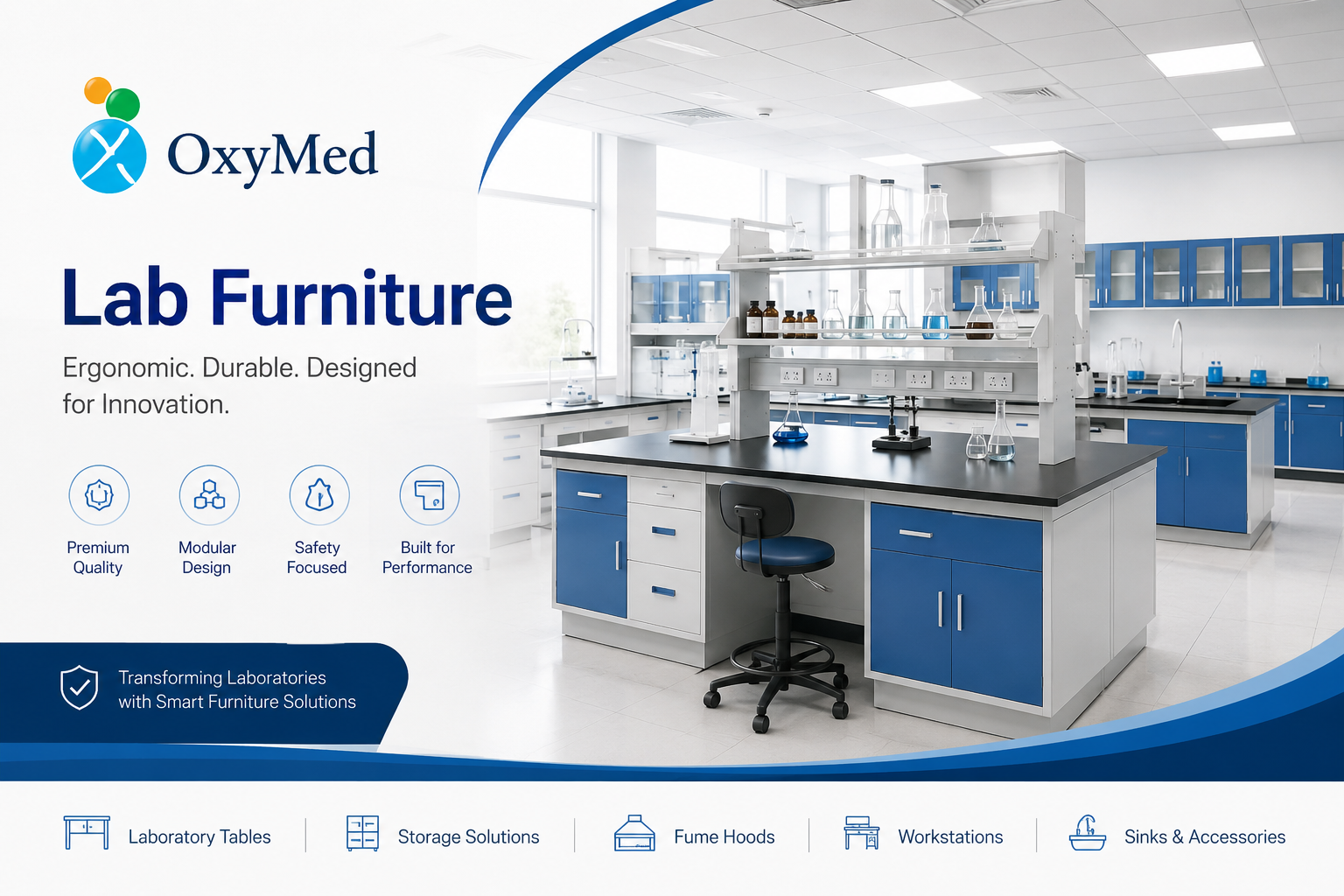
High-quality laboratory furniture is essential for safe, efficient, and compliant research, clinical, and industrial laboratory operations. In the UAE—a fast-growing hub for healthcare, biotech, education, and petrochemical testing—selecting the right lab furniture partner affects productivity, safety, and regulatory compliance. OxyMed has emerged as a leading Lab Furniture Supplier across the UAE by combining durable products, innovative design, and tailored solutions that meet local standards and international best practices. This article explains why OxyMed stands out, covering product quality, innovation, custom solutions, compliance and certifications, after-sales support, and customer success stories. It’s written for lab managers, facility planners, procurement teams, and decision-makers who need an authoritative, actionable guide when choosing a lab furniture supplier.
Why lab furniture matters: more than tables and benches
Laboratory furniture is more than aesthetic furnishings. It plays a central role in workflow efficiency, personnel safety, contamination control, and asset longevity. Core reasons for choosing the right furniture provider:
- Safety and compliance: Properly constructed benches, cabinets, and fume cupboards reduce chemical exposure, fire risk, and electrical hazards.
- Workflow optimization: Ergonomic workstations and intelligently arranged storage improve throughput and reduce errors.
- Contamination control: Durable, non-porous surfaces and sealed junctions maintain cleanroom-like conditions where necessary.
- Long-term cost efficiency: Quality materials and modular systems reduce maintenance, downtime, and replacement costs.
- Future-proofing: Flexible, modular furniture supports evolving instrumentation and changing workflows.
OxyMed’s approach emphasizes these points, which is why healthcare, academic, and industrial laboratories across the UAE choose them.
Quality: materials, manufacturing, and durability
High-quality materials and manufacturing are non-negotiable for lab environments. OxyMed prioritizes materials and construction techniques chosen for chemical resistance, mechanical strength, and ease of maintenance.
Materials selection
- Worktops and surfaces: OxyMed offers a range of worktop materials tailored to use-cases—chemical-resistant epoxy resin for corrosive chemistry, phenolic resin for general-purpose labs, stainless steel for sterility and cleanability, and high-pressure laminate for administrative zones. Each material is specified for appropriate chemical compatibility and thermal resistance.
- Cabinetry and frames: Cabinets employ powder-coated steel or marine-grade stainless steel frames to resist corrosion in humid environments. Heavy-duty drawer runners and reinforced shelving handle repeated loading and equipment vibration.
- Fasteners and seals: Non-reactive fasteners, seamless joints, and chemical-resistant gaskets minimize contamination traps and improve wipe-down cleaning.
Precision manufacturing and assembly
- QC at every stage: OxyMed uses controlled production workflows with in-line inspections. Dimensional checks, surface finish tests, and load-bearing verifications ensure units meet design specifications prior to shipment.
- Modular tolerances: Their systems adhere to tight tolerances so components fit precisely when assembled on site—reducing installation time and preventing misalignments that create safety hazards.
- Protective coatings and finishes: Powder coating is cured under controlled conditions to ensure adhesion and longevity, while anti-microbial surface options are available for healthcare environments.
Durability and lifecycle thinking
OxyMed designs furniture to deliver low total cost of ownership. Their durable materials resist chemical etching, physical wear, and warping. By focusing on modularity and replaceable components (e.g., drawer liners, hinges, gaskets), they make maintenance and upgrades straightforward and cost-effective.
Innovation: design, ergonomics, and integrated systems
Innovation isn’t only about new materials; it’s about solving practical laboratory problems through design and integration. OxyMed demonstrates innovation in ergonomics, space utilization, and technology integration.
Ergonomic and human-centered design
- Adjustable benches: Height-adjustable workstations accommodate seated and standing work, reducing musculoskeletal strain and increasing productivity.
- Task-specific zones: Ergonomic placement of sinks, gas outlets, electrical modules, and instrument recesses reduces reach and cross-traffic, optimizing workflow.
- User-centric storage: Pull-out reagent cabinets, tilt-out waste bins, and labeled storage help users find supplies quickly and maintain organization.
Space optimization and modularity
- Compact footprints: OxyMed’s modular islands, canopy systems, and wall-mounted units let facilities maximize usable floor area—critical for research centers in high-rent UAE cities.
- Reconfigurable modules: Lab layouts change with research programs. OxyMed’s plug-and-play components—service columns, bench clusters, and mobile carts—allow labs to reconfigure with minimal downtime.
- Built-in utilities: Integrated service panels for gas, vacuum, and electrical reduce visible cabling and make maintenance easier.
Integrated technology and smart labs
- Utility management: OxyMed integrates centralized utility panels, quick-connect fittings, and medical gas modules to reduce installation complexity and improve safety.
- Cable management: Concealed cable trays and power distribution strips prevent trip hazards and simplify equipment servicing.
- Data-ready infrastructure: Labs increasingly require data connectivity for instruments and IoT devices. OxyMed provides pathways and racks to support data cabling and instrument networking.
- Ventilation and containment: Compatible options for canopy hoods, ductless fume filtration, and containment cabinets ensure OxyMed solutions meet the needs of chemical, biological, and cleanroom labs.
Custom solutions: tailored for UAE projects
Every laboratory has unique needs—regulated clinical labs, pilot chemistry labs, QA/QC testing facilities, and educational labs each impose different requirements. OxyMed offers custom design and turnkey services across the project lifecycle.
Needs assessment and planning
- Site surveys: OxyMed performs on-site assessments that consider existing utilities, floor loading, ventilation, and spatial constraints.
- User workshops: They engage lab stakeholders to map workflows, storage needs, and safety priorities.
- Regulatory alignment: Early planning ensures designs align with UAE and international standards (e.g., local health authorities, GxP, ISO).
Custom design and engineering
- BIM and CAD integration: OxyMed produces detailed CAD drawings and BIM models that integrate with client architecture and MEP plans, enabling coordinated construction.
- Bespoke finishes and branding: For corporate labs and institutions, OxyMed offers color-matched cabinetry, branded panels, and custom signage to align with identity.
- Specialized modules: They design biosafety cabinet integration, cold-storage shelters, vibration-dampened benches for analytical instruments, and solvent-safe storage for chemical inventories.
Turnkey delivery and installation
- Project management: OxyMed assigns project managers to coordinate fabrication, shipping, local permits, and on-site installation with clear timelines.
- Certified installers: Installation teams follow SOPs that minimize disruption and ensure correct leveling, anchoring, and utility connections.
- Punch lists and sign-off: Post-installation checks validate performance before handover.
Compliance, standards, and certifications
Laboratories in the UAE must adhere to local regulations and often seek compliance with international standards. OxyMed demonstrates commitment to regulatory and quality frameworks.
Relevant standards and practices
- ISO-based quality: OxyMed’s manufacturing and quality management systems align with ISO principles that assure consistency and traceability.
- Material safety: They specify materials compliant with chemical resistance databases and provide safety data sheets (SDS) for components where applicable.
- Electrical and gas safety: Utility modules and medical gas components follow recognized standards and are installed per manufacturer and regulatory requirements.
Documentation and support for audits
- As-built documentation: OxyMed supplies detailed technical drawings, utility schematics, and installation records to support compliance reviews.
- Maintenance manuals: Comprehensive maintenance and cleaning guides help labs meet accreditation and audit requirements.
- Warranty and parts traceability: Clear warranty terms and parts traceability enable fast replacements and support long-term validation needs.
After-sales service: training, maintenance, and spare parts
Purchasing lab furniture is the start of a lifecycle, and OxyMed’s after-sales services reduce downtime and protect investment value.
Preventive maintenance and scheduled servicing
- Maintenance programs: OxyMed offers preventive maintenance packages for hinges, gas fittings, and seals to prolong equipment life.
- Field technicians: Local UAE-based technicians respond for repairs and adjustments to keep labs operational.
Training and operational support
- User training: OxyMed trains lab staff on safe use of workstations, fume hoods, and integrated modules.
- Cleaning protocols: They provide tailored cleaning and disinfection protocols for chosen materials—crucial for clinical and sterile environments.
Spare parts and upgrades
- Readily available spares: Common components and consumables are stocked to minimize repair lead times.
- Upgrade pathways: As labs grow, OxyMed supplies compatible modules for expansion rather than full replacements.
Sustainability and environmental responsibility
Sustainability is increasingly important for institutional procurement. OxyMed takes measures to reduce environmental impact across product design and operations.
Eco-friendly materials and waste reduction
- Low-VOC coatings: They use finishes with low volatile organic compound emissions to protect indoor air quality.
- Recyclable materials: Where possible, materials are selected for recyclability or longer lifespans to reduce waste.
Energy and resource efficiency
- Efficient logistics: Local warehousing and consolidated shipments reduce transportation emissions within the UAE region.
- Durable design: Long-life products help minimize the carbon footprint associated with replacements.
Corporate responsibility
- Local partnerships: OxyMed partners with UAE-based contractors and suppliers to boost the local economy and ensure faster support.
- Worker safety and training: Their manufacturing and installation practices include safety standards protecting workers and clients.
Use cases and customer success stories in the UAE
Concrete examples help demonstrate how OxyMed’s features translate to real-world value. Below are anonymized, representative case studies reflecting typical UAE projects.
Why OxyMed over other suppliers: key differentiators
With many vendors in the market, here’s how OxyMed distinguishes itself in the UAE.
Local presence with global standards
- UAE footprint: Local offices and installers reduce lead time and provide rapid service response compared with foreign suppliers operating remotely.
- Global quality: Designs and materials meet international standards while being adapted for UAE climate and regulations.
End-to-end project capability
- From consultation to handover: OxyMed handles planning, fabrication, installation, and after-sales support—minimizing coordination friction for clients.
- Single-source responsibility: One accountable vendor simplifies procurement and warranty management.
Customization without complexity
- Modular building blocks: Customization is achieved through configurable modules, reducing the cost and time associated with bespoke solutions.
- CAD/BIM collaboration: Offering digital design artifacts helps integrate laboratory furniture into larger construction projects.
Focus on safety and compliance
- Documented processes: As-built documentation, SDS, and maintenance records support audits and accreditations required by medical, educational, and industrial labs.
- Trained installation teams: Certified installers ensure utilities and containment systems are installed safely and per specifications.
Transparent pricing and cost-control
- Lifecycle cost analysis: OxyMed helps clients evaluate total cost of ownership rather than lowest upfront price.
- Flexible financing: For large projects, they may offer phased rollout options or financing to spread costs.
How to evaluate a lab furniture supplier: checklist for procurement teams
When procuring lab furniture, consider the following criteria—OxyMed meets these benchmarks in the UAE market.
- Material compatibility: Are worktops, cabinetry, and seals compatible with the chemicals and procedures used?
- Regulatory alignment: Can the vendor provide documentation and support for audits and certifications?
- Design services: Do they offer CAD/BIM, site surveys, and user workshops?
- Installation and warranty: Are certified installers available locally, and what warranty terms apply?
- After-sales support: Is there a preventive maintenance plan and quick spare parts availability?
- Customization and modularity: Can the product be reconfigured as needs evolve?
- Local presence: Is there local warehousing, technical support, and knowledge of UAE codes?
Cost considerations and budgeting tips
Budgeting for lab furniture needs both upfront and lifecycle views. Here are practical tips:
- Prioritize safety and critical surfaces: Invest in corrosion-resistant tops and containment first; cosmetic features can come later.
- Modular staging: Implement modular systems in phases to align with funding cycles while keeping future expansion in mind.
- Request lifecycle cost projections: Ask suppliers to model replacement intervals, maintenance costs, and energy impacts.
- Include installation and utilities: Factor in MEP hookups, verification testing, and commissioning into budgets.
- Negotiate warranty and service levels: Longer warranties and defined response times reduce long-term risk.
Common FAQs about lab furniture and OxyMed
- Q: Can OxyMed work with existing labs for retrofits?
A: Yes. They perform site surveys and provide retrofit solutions that integrate with existing utilities and layouts.
- Q: How long does installation typically take?
A: Timelines vary by project scope; small lab fits may take days, larger turnkey projects several weeks. OxyMed provides project schedules during planning.
- Q: Does OxyMed provide warranties?
A: Yes. Standard warranties cover manufacturing defects; extended warranties and maintenance contracts are available.
- Q: Are OxyMed materials compatible with UAE environmental conditions?
A: Yes. Materials and finishes are chosen for heat and humidity resistance common in the UAE, and local installers ensure proper sealing and ventilation.
- Q: Can they supply fume hoods and biosafety cabinets?
A: OxyMed supplies and integrates various containment solutions, including ductless fume hoods, ducted hoods, and provisions for biosafety cabinet installation. Specific certifications for biosafety cabinets depend on the model and regulatory requirements.
Practical next steps for interested buyers
If you’re evaluating OxyMed for a UAE lab project, follow these steps:
- Define requirements: Document workflows, chemical lists, instrument footprints, and throughput expectations.
- Request a site survey: Invite OxyMed to survey the site and discuss utility capacities and constraints.
- Ask for CAD/BIM drawings: Require digital designs to coordinate with MEP and architecture teams.
- Compare lifecycle costs: Request detailed quotes including installation, warranty, and maintenance options.
- Check references: Visit completed projects or speak to existing clients in the UAE to validate claims.
Conclusion
Selecting the right lab furniture supplier in the UAE requires balancing material performance, regulatory compliance, ergonomic design, and responsive service. OxyMed stands out by blending high-quality materials, precision manufacturing, and user-centered innovation with local support and turnkey services. Their focus on modularity, compliance documentation, and after-sales maintenance makes them a strategic partner for academic institutions, clinical labs, and industrial facilities. For procurement teams seeking low total cost of ownership, scalability, and demonstrable safety, OxyMed is a leading choice in the UAE market.