

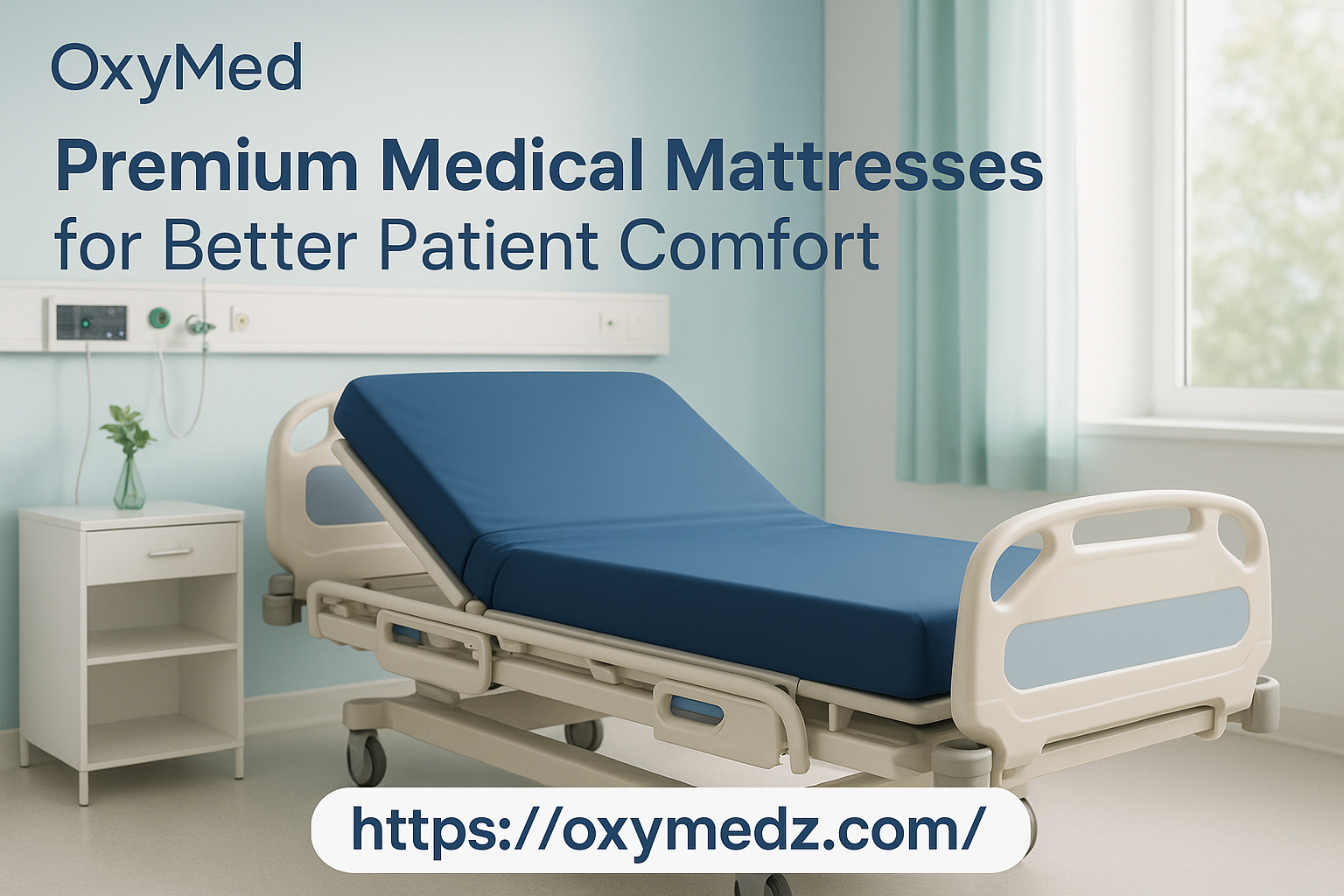
Medical mattresses play a crucial role in healthcare, offering specialized support and comfort to patients with various conditions. Unlike regular mattresses, these are designed to alleviate pressure, improve circulation, and enhance patient recovery. For caregivers and healthcare facilities, choosing the right medical mattress is essential for effective patient care.
At OxyMed, we are committed to providing cutting-edge medical mattresses that prioritize comfort, durability, and therapeutic benefits. This guide will walk you through everything you need to know about medical mattresses—from types and features to benefits and buying tips.
Medical mattresses, also referred to as hospital or therapeutic mattresses, are specially engineered sleep surfaces designed to reduce risks such as pressure ulcers, improve patient mobility, and provide comfort during long periods of bed rest. They are different from standard mattresses as they include pressure relief technology, antimicrobial materials, and fire-retardant fabrics suited for medical environments.
Patients confined to beds due to surgery, chronic illness, or mobility issues are vulnerable to discomfort and complications such as bedsores (pressure ulcers). Medical mattresses mitigate these issues by distributing weight evenly and minimizing pressure points. This boosts recovery, reduces hospital stays, and improves quality of life.
Understanding the various types of medical mattresses can help caregivers or patients select the one that perfectly fits their needs. OxyMed’s product range includes:
These mattresses use specialized foam or gel layers to distribute pressure evenly, preventing bedsores. They are ideal for patients at high risk of developing pressure ulcers.
Featuring air cells that cyclically inflate and deflate, these mattresses promote blood circulation and reduce prolonged pressure on any one part of the body. They are commonly used in hospitals for critically ill or immobile patients.
With breathable air flow, these mattresses help regulate skin moisture and temperature, further preventing skin breakdown. They are perfect for patients with sensitive skin or wounds.
Made from high-density foam, these mattresses offer firm support and comfort. They are durable and easy to maintain, suitable for both hospital and home care.
Combining foam, air, and gel technologies, hybrid medical mattresses provide the best of all worlds—pressure relief, temperature regulation, and support.
OxyMed builds each mattress with attention to features that enhance patient comfort and healthcare outcomes:
Choosing OxyMed medical mattresses comes with multiple benefits that impact both patients and caregivers positively:
Selecting the perfect medical mattress depends on various factors such as:
OxyMed provides consultation services to help you select the mattress that best addresses these critical factors.
Proper maintenance of medical mattresses ensures they deliver optimum comfort and longevity. Guidelines include:
OxyMed mattresses come with detailed care instructions and customer support.
The medical mattress industry is evolving with smart technologies integrated for enhanced patient care:
OxyMed stays at the forefront of innovation, bringing these advancements to healthcare facilities and homes.
Many patients and healthcare professionals have experienced transformations through OxyMed medical mattresses.
“After switching to an OxyMed alternating pressure mattress, my father’s bedsores healed faster, and his sleep improved significantly.” – Sarah M., Caregiver
Medical mattresses, like those from OxyMed, are specially designed to provide pressure relief, promote healing, and prevent bedsores, unlike regular mattresses which focus mainly on comfort.
Patients with limited mobility, those recovering from surgery, elderly individuals, or anyone at risk of pressure ulcers benefit most from OxyMed medical mattresses.
Consider factors such as patient condition, risk of pressure ulcers, mattress features like pressure redistribution, and support level. OxyMed offers expert consultation to guide your choice.
Yes, OxyMed mattresses feature waterproof, antimicrobial covers that are easy to clean and designed for hygienic use in healthcare settings.
Alternating pressure mattresses from OxyMed cyclically redistribute pressure, significantly reducing the risk of bedsores compared to static mattresses.
Absolutely. OxyMed provides medical mattresses suitable for home care, offering the same comfort and therapeutic benefits as in hospitals.
We use high-quality foam, air cell technology, gel layers, and antimicrobial fabric to ensure durability, comfort, and hygiene.
With proper care, our medical mattresses last between 5 to 7 years, maintaining their supportive and protective qualities.
Yes, OxyMed offers a range of mattresses designed to support various weights and body types while maintaining pressure relief and durability.
Coverage varies by provider and policy. Many insurance plans do cover medical mattresses prescribed by a doctor. Consult your insurer for specific details.
Follow Us: Instagram, Facebook
©Copyright 2026 All Rights Reserved.
