

Sterilizing surgical instruments means completely eliminating all forms of microbial life, including bacteria, viruses, fungi and spores, from every surface that will contact patient tissue. This goes beyond routine cleaning and disinfection and is critical for preventing surgical site infections, cross‑contamination and outbreaks in operating theatres and procedure rooms.
In modern healthcare facilities, sterilization is part of a structured infection control program that covers pre‑cleaning, decontamination, packaging, sterilization, storage and monitoring. When these stages are followed consistently and documented properly, healthcare providers build strong clinical trust, meet regulatory requirements and support better patient outcomes.
Proper sterilization begins at the point of use, as soon as instruments leave the surgical field, to prevent organic debris from drying onto metal surfaces. Teams should keep instruments moist using appropriate solutions or damp sterile cloths and avoid piling sharp instruments in ways that cause damage or injury.
Used instruments must be transported to the decontamination area in closed, clearly labelled containers that protect staff from exposure to blood and body fluids and reduce the risk of environmental contamination. Clean and dirty pathways should be separated within the facility to maintain a safe workflow and support infection prevention standards.
Cleaning is the most important preparatory stage, because residual protein, fat or biofilm can shield microorganisms from sterilizing agents and make the process ineffective. Staff should use soft brushes, approved detergents and correctly heated water to remove visible soil from joints, hinges, lumens and serrations.
Where available, automated washer‑disinfectors and ultrasonic cleaners help reach internal channels and fine surfaces that are difficult to access manually. Instruments must be rinsed thoroughly to remove detergent residues, then dried completely to prevent corrosion and avoid dilution of steam, gas or chemical sterilants.
After cleaning and drying, every instrument should be inspected under good lighting to check for cracks, corrosion, loose parts or trapped debris. Scissors, clamps and needle holders require functional testing to confirm smooth opening and closing, proper alignment and reliable performance during surgery.
Specialized lubricants designed for surgical instruments may be used on metal‑to‑metal joints to reduce wear and protect against rust, but industrial oils and household products must be avoided. Damaged instruments should be removed from service, repaired or replaced promptly to uphold safety and maintain efficient sterile processing workflows.
Before instruments enter any sterilization process, they should be arranged in sets according to procedure type, with heavier items placed at the bottom and delicate devices protected from pressure. Hinged instruments must be sterilized in the open position so that sterilizing agents can reach hidden surfaces and hinges are not damaged by heat expansion.
Packaging options include sterilization trays, wrapped packs and individual pouches made from materials compatible with the chosen sterilization method. Each pack should be labelled with contents, the date of sterilization and, when possible, a batch or load number to support traceability and simple auditing.
Steam sterilization using autoclaves is the most widely recommended method for metal surgical instruments because it is effective, relatively fast and environmentally friendly. Autoclaves use saturated steam under pressure at high temperatures to inactivate microorganisms, including resistant spores, when operated correctly.
Typical cycles for unwrapped instruments use specific combinations of temperature, pressure and time, and wrapped sets often require longer cycles at similar pressures. Chambers must not be overloaded, and packs should be arranged to allow free circulation of steam around every surface so that no instrument remains in a “cold spot”.
At the end of each sterilization cycle, controlled drying is necessary to prevent condensation and the formation of wet packs, which can compromise sterility. Autoclave doors are usually opened slightly to release excess steam while a dedicated drying phase runs according to manufacturer guidance.
Staff should use sterile tongs or gloves to remove hot packs, which are then allowed to cool to room temperature before handling or storage. Wrapped instruments remain sterile for extended periods when stored in clean, dry, closed cabinets, provided wraps stay intact and free from moisture, dust or visible damage.
Some devices, such as flexible endoscopes, certain plastics and electronic components, cannot tolerate steam autoclaving and therefore require low‑temperature methods. These include ethylene oxide gas, hydrogen peroxide gas‑plasma and similar advanced technologies designed to achieve full sterilization without damaging sensitive materials.
Low‑temperature systems follow precise cycles for temperature, humidity, gas concentration and exposure time, defined by manufacturers and guidelines. Facilities must ensure suitable ventilation, aeration time and staff training, because some gases remain harmful if instruments are not processed correctly before patient use.
Liquid chemical sterilants provide an option when heat and gas methods are unsuitable, particularly for delicate instruments and semi‑critical devices. Common solutions require specific immersion times, temperatures and rinsing protocols to be effective.
To achieve true sterilization with chemicals, instruments may need extended soaking, which can be harsh on fine metal components. When a facility only needs high‑level disinfection instead of full sterilization, shorter contact times are possible, but staff must follow product instructions carefully and rinse with sterile or treated water before use on patients.
Dry heat sterilizers offer another solution for instruments that can tolerate higher temperatures without moisture, such as some metal tools and glassware. This method uses hot air at controlled temperatures for defined periods to destroy microorganisms, but penetration is slower than steam and cycles are generally longer.
Dry heat is particularly useful where corrosion from moisture must be avoided or where facility design favours simple heating systems over complex steam networks. As with any method, instruments must be clean and properly arranged, and temperature monitoring should confirm that the entire load receives adequate exposure.
A reliable sterilization program depends on several forms of monitoring, including physical, chemical and biological indicators. Physical monitoring records core parameters such as time, temperature and pressure for each cycle, often via autoclave charts or digital logs.
Chemical indicator tapes, strips or integrators placed outside and inside packs change colour when exposed to conditions associated with successful cycles. Biological indicators use resistant bacterial spores to confirm that sterilization conditions were lethal and are recommended regularly, especially when commissioning new equipment or modifying processes.
High‑quality sterilization cannot be achieved without trained staff who understand equipment operation and infection prevention principles. Healthcare facilities should implement clear written procedures covering every stage, from point‑of‑use handling through to final storage and record keeping.
Regular competency checks, refresher training and internal audits help teams maintain consistent performance and adapt to updated guidelines or new technologies. Safety measures must address burns, chemical exposure and sharps injuries by enforcing correct use of personal protective equipment and designing safe layouts for decontamination and sterilization areas.
Healthcare providers should base their sterilization workflows on recognized infection control guidelines and local regulatory requirements. These standards define suitable methods for specific instrument types, minimum exposure parameters and documentation practices that support accreditation and legal compliance.
Aligning practice with current evidence helps facilities respond to emerging pathogens and resistant organisms that demand robust decontamination strategies. When purchasing new instruments or devices, teams should review manufacturer instructions for cleaning and sterilization to ensure compatibility with existing systems and approved methods.
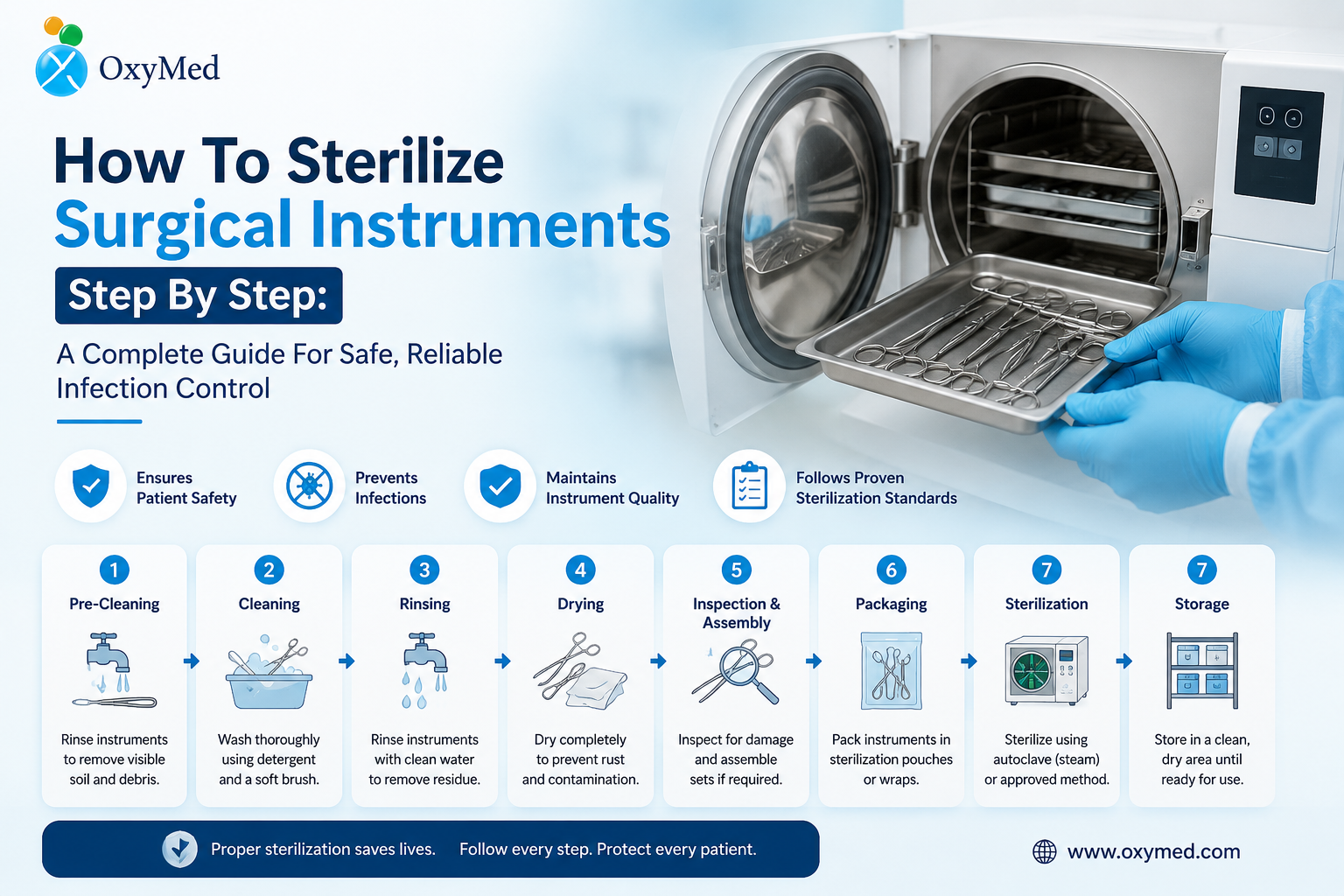
To sterilize surgical instruments effectively and consistently, facilities can follow this structured sequence of actions:
By following these steps, healthcare facilities create a dependable sterilization system that protects patients from infection, supports surgeons and nurses in every procedure and reflects strong commitment to quality and safety.
Also Follow Us: Facebook, Instagram
©Copyright 2026 All Rights Reserved.
