

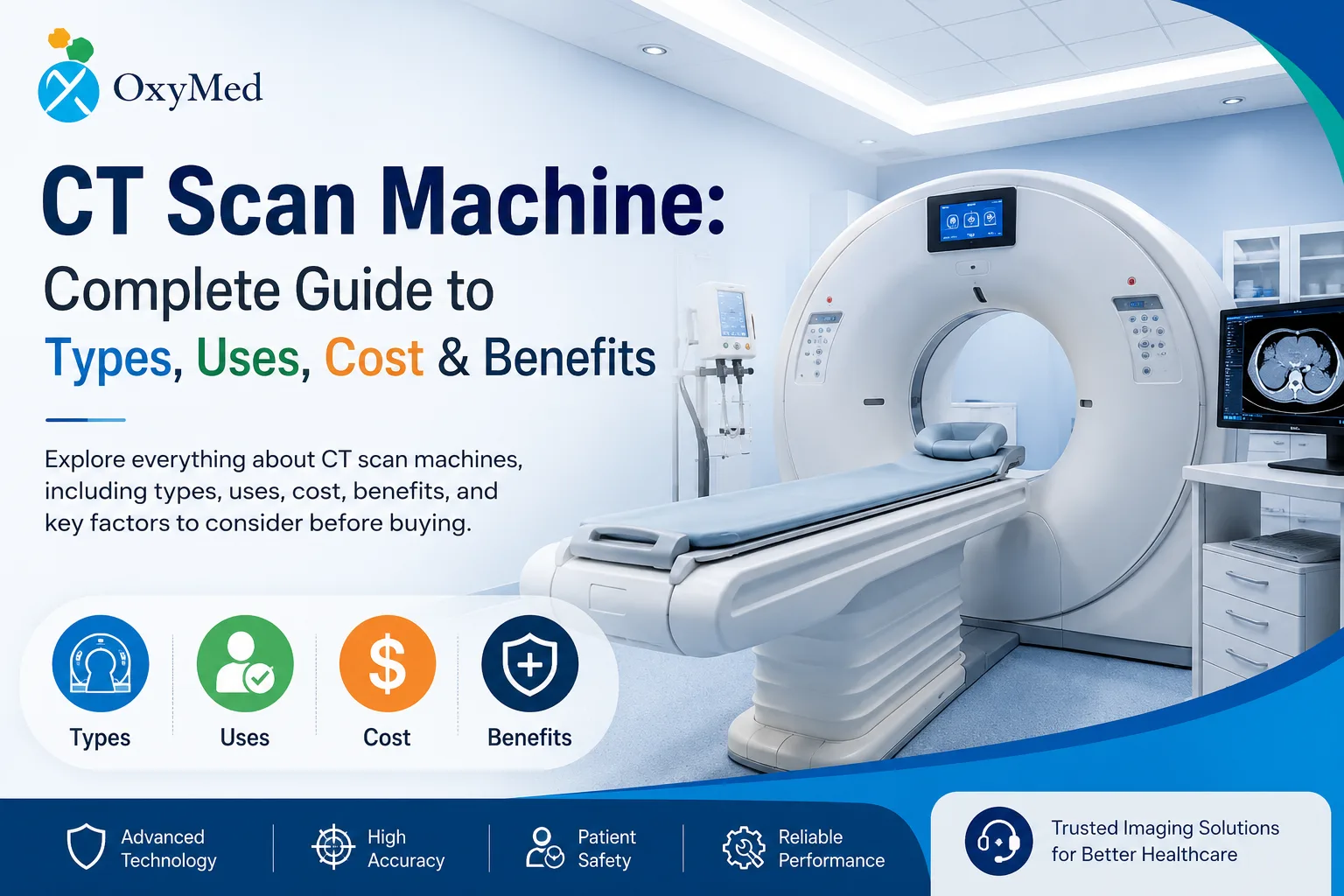
A CT scan machine, also called a computed tomography scanner, uses X-rays and computer processing to create detailed images of internal organs, bones, blood vessels, and soft tissues. Unlike a standard X-ray, which gives a flat image, CT scanning captures many angles and builds a more complete view of the body.
This guide is written to help patients, healthcare buyers, hospital administrators, and medical writers understand CT scan machines in a clear and practical way. It covers the main types of CT scanners, common medical uses, cost factors, benefits, and important buying considerations for healthcare facilities.
A CT scan machine is a medical imaging device that takes a series of X-ray images from different angles and combines them into detailed slices of the body. These slices can then be viewed individually or reconstructed into 3D images for diagnosis and treatment planning.
CT scans are especially useful when doctors need more detail than an X-ray can provide. They help detect injuries, infections, tumors, internal bleeding, and other conditions quickly and accurately.
During a CT scan, the patient lies on a table that moves through a circular scanner while the X-ray tube rotates around the body. The machine gathers many images from different angles, and a computer processes them into a detailed view of the inside of the body.
Some CT scans use contrast material to improve visibility of blood vessels, organs, or abnormal tissue. This is common in scans of the brain, chest, abdomen, and heart when doctors need more precision.
CT machines come in several types, and the right one depends on clinical demand, image quality requirements, and budget. Hospitals often choose scanner type based on patient volume, specialty services, and whether the focus is emergency care, cardiac imaging, or routine diagnostic work.
Spiral or helical CT is widely valued because it can create 3D images and detect small abnormalities efficiently. Multi-slice scanners are popular in modern hospitals because they improve scan speed and image quality, which matters in emergency and vascular imaging.
CT scan machines are used across many clinical departments because they are fast, versatile, and highly informative. They support diagnosis, surgery planning, cancer care, trauma care, and radiation treatment planning.
Common uses include:
CT scans are especially important in emergencies because they provide fast answers when time matters. They can help doctors decide whether surgery is necessary and reduce the need for exploratory procedures.
The biggest benefit of CT scanning is speed combined with detail. Doctors can often get a clearer view of internal problems much faster than with many other imaging methods.
Key benefits include:
CT also offers strong value for hospitals because one machine can support many departments, from emergency care to oncology and orthopedics. That versatility is one reason CT scanners remain essential in modern diagnostic centers.
The cost of a CT scan machine varies widely depending on brand, model, slice count, image quality, and whether the unit is new or refurbished. High-end scanners with more advanced capabilities usually cost more because they support faster scans and specialized imaging.
Important cost factors include:
Refurbished CT scanners can cost significantly less than brand-new machines, with some sources noting savings of 30–50% or more depending on condition and configuration. Buyer-focused industry content also highlights that cost-effective used systems may reduce acquisition cost substantially compared with new units.
Healthcare buyers should look beyond purchase price and evaluate total ownership cost. A lower upfront price can become expensive if maintenance, downtime, or image quality does not meet clinical needs.
Before buying, check:
For hospitals and diagnostic centers, the best machine is usually the one that matches patient volume and case mix. For example, a trauma hospital may prioritize speed, while a specialty cardiac center may prioritize advanced heart imaging.
CT scans involve ionizing radiation, so they should always be used when medically necessary. In many cases, the clinical benefit outweighs the risk, especially when the scan helps diagnose serious illness quickly.
Patients are usually asked to remove metal objects and remain still during the scan. If contrast is used, the healthcare team may check for allergies or kidney-related risks before the procedure.
Doctors may recommend a CT scan when they need detailed imaging for symptoms such as severe pain, suspected internal injury, unexplained swelling, neurological symptoms, or suspected cancer. CT is also common after accidents, in stroke workups, and when planning major treatment.
It is not always the first imaging test, but it becomes essential when speed, clarity, or deeper detail is needed. That is why CT remains one of the most trusted tools in diagnostic medicine.
A CT scan machine is a powerful diagnostic tool that helps doctors see inside the body quickly and clearly. Its different types, broad medical uses, and strong clinical benefits make it a core investment for hospitals, diagnostic centers, and emergency care providers.
Also Follow Us: Facebook, Instagram
©Copyright 2026 All Rights Reserved.
