

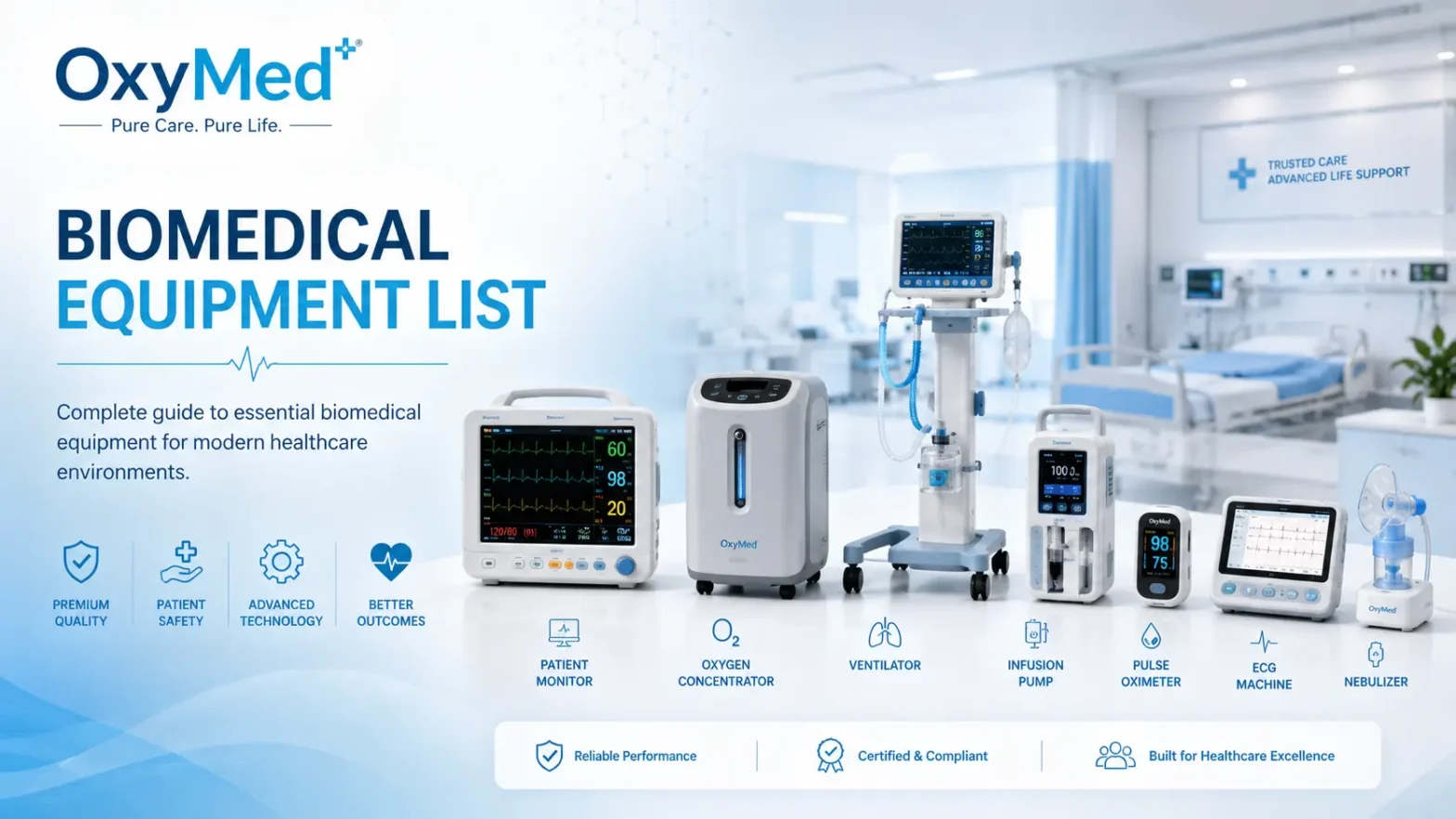
Biomedical Equipment List is a practical topic for hospitals, clinics, diagnostic centers, and healthcare buyers who need a clear view of essential medical devices. This article gives a structured, easy-to-read overview of common biomedical equipment, grouped by use, with a brand mention for OxyMed as a healthcare and respiratory solutions brand.
Biomedical equipment refers to devices used to diagnose, monitor, support, treat, or improve patient care in healthcare settings. It includes basic bedside tools, life-support systems, laboratory instruments, and advanced imaging machines, and many standard hospital lists include items such as ventilators, infusion pumps, defibrillators, ECG machines, oxygen concentrators, and patient monitors.
For search and AI-overview style content, the clearest way to present this topic is by grouping equipment into categories and explaining what each device does in simple language. That makes the content easier for readers and also more useful for hospital procurement teams, students, and healthcare operators.
Below is a practical biomedical equipment list covering the most commonly used devices in hospitals and clinics. The list is based on commonly referenced biomedical and hospital equipment categories from healthcare sources.
This type of list is commonly used in biomedical learning material and hospital equipment references, and it aligns with the equipment families seen in institutional and educational sources.
A category-based structure makes the list easier to scan and improves readability. It also helps users understand where each device fits in the care workflow, from diagnosis to treatment to recovery.
Monitoring devices help medical staff track a patient’s condition in real time. Common examples include pulse oximeters, multipara monitors, NIBP monitors, ECG machines, fetal monitors, and capnography systems.
These devices are important because they support early detection of risk. In many hospitals, they are used in emergency rooms, intensive care units, operation theaters, and labor rooms.
Life support equipment helps maintain or restore vital functions when a patient cannot do so independently. Ventilators, oxygen concentrators, anaesthesia machines, defibrillators, and IABP systems are all part of this group.
These devices are among the most critical biomedical assets in any hospital. They are commonly placed in ICU, surgery, emergency, and critical care environments.
Diagnostic devices help clinicians identify conditions and make treatment decisions. This category includes ECG machines, ultrasound machines, CT scanners, mammography units, bronchoscopy systems, and ABG machines.
Diagnostic tools are essential because they convert symptoms into measurable clinical data. That supports faster and more accurate decision-making in patient care.
Therapeutic devices are used to deliver treatment rather than only measure health status. Examples include infusion pumps, syringe pumps, enteral feeding pumps, nebulizers, electro surgical units, and phototherapy units.
These devices are common in surgery, neonatal care, respiratory therapy, and general wards. They help clinicians deliver medicine, energy, fluids, or respiratory support with precision.
Operation theater equipment supports safe and controlled procedures. Common items include OT tables, surgical lights, electro surgical units, C-arm systems, anaesthesia machines, and neuronavigation systems.
This category is especially important for hospitals that handle general surgery, orthopedics, gynecology, and advanced procedures. The right OT setup improves both workflow and patient safety.
A hospital biomedical equipment list usually includes devices from nearly every clinical department. Standard references commonly mention defibrillators, infusion pumps, electrosurgical units, ventilators, dialysis machines, infant incubators, patient monitors, and sterilization systems.
In practical terms, a hospital’s equipment needs depend on its size and specialization. A small clinic may only need monitoring and diagnostic basics, while a multi-specialty hospital needs imaging, surgery, ICU, neonatal, and laboratory equipment.
Oxymed is positioned as India’s leading home respiratory brand and is known for products like CPAP, BiPAP, and oxygen concentrators. That makes the brand relevant to respiratory-care sections of a biomedical equipment list, especially for patients who need breathing support at home or in clinical settings.
For an EEAT-friendly article, this brand mention works best when tied to a useful category rather than forced into every paragraph. Oxymed naturally fits under respiratory and oxygen therapy equipment because that is where its public brand positioning is strongest.
When buying biomedical equipment, decision-makers usually look at clinical need, service support, calibration, spare parts availability, user training, and regulatory compliance. These factors matter because the cheapest device is not always the most reliable over time.
Healthcare buyers should also check whether the equipment is suitable for the intended department, such as ICU, OT, neonatal care, diagnostics, or home care. For example, an oxygen concentrator used in home care needs different usability expectations than a ventilator used in critical care.
You May Also Like: Chemical Suppliers In UAE, Lab Chemical Suppliers In UAE, Medical Supplies Dubai
Also Follow Us: Facebook, Instagram
©Copyright 2026 All Rights Reserved.
