

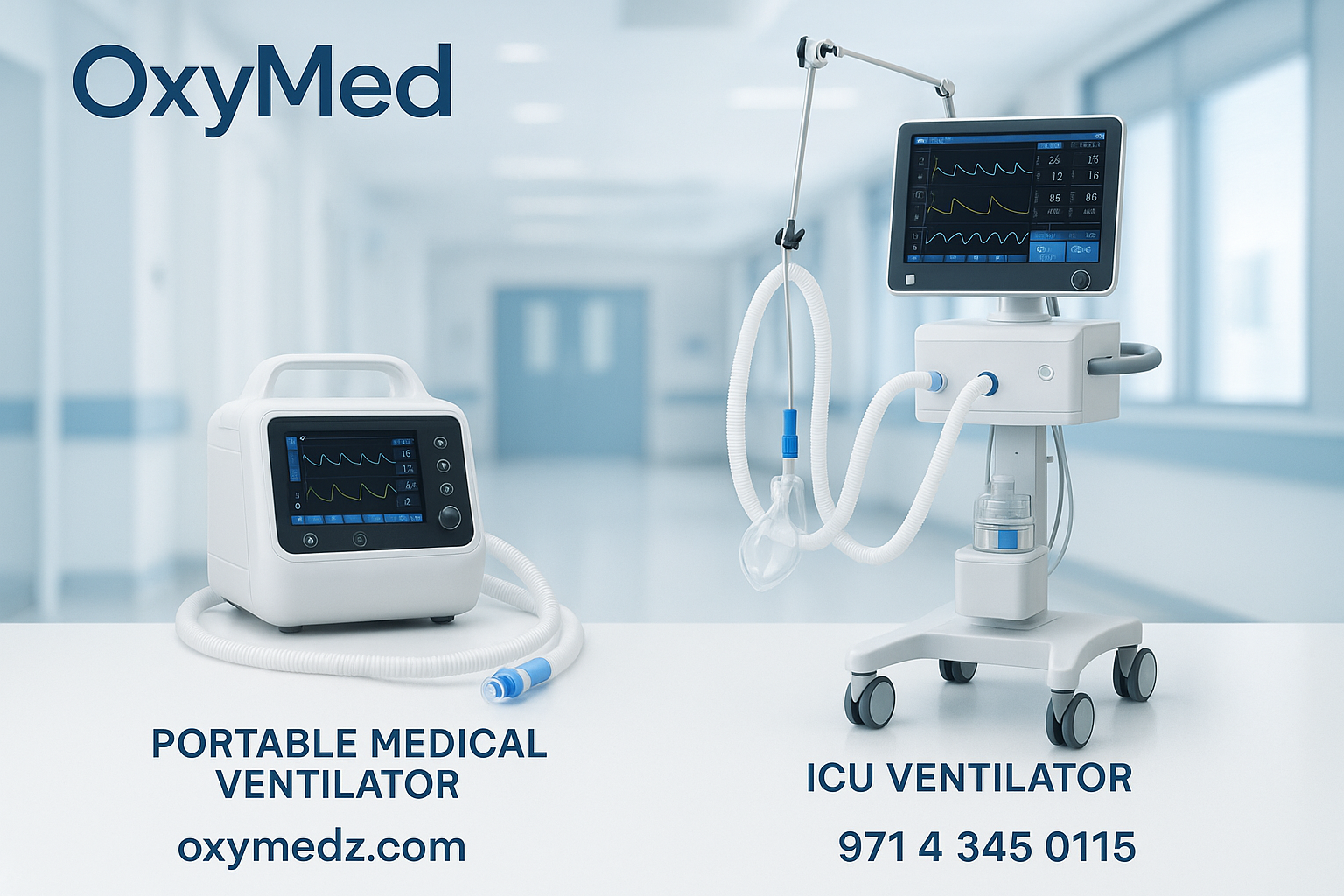
Portable medical ventilators and ICU ventilators play essential roles in modern health care, but they differ in design, application, and technological sophistication. Understanding these differences is important for clinicians, hospital administrators, patients, and caregivers seeking the most effective respiratory support solutions.
A ventilator is a machine designed to move breathable air in and out of the lungs for patients who cannot breathe adequately on their own. Ventilator machines are key tools in critical care, emergency response, and long-term respiratory management.
Portable medical ventilators are lightweight, compact devices capable of delivering life-saving respiratory support outside of hospital ICUs. These machines are designed for emergency transport, home care, ambulatory settings, and temporary patient support.
Key Features:
ICU ventilators are advanced ventilator machines that provide critical life support in intensive care units for severely ill or injured patients. These devices support invasive and non-invasive ventilation, monitor dozens of respiratory parameters, and offer sophisticated modes of operation.
Key Features:
ICU ventilators feature advanced alarms, self-testing, and automatic calibration, whereas portable machines focus on user-friendly safety features to ensure reliability outside of hospitals.
Portable ventilators are used where mobility and speed are essential, such as ambulances, patient homes, and during mass casualty events. ICU ventilators, by contrast, are deployed in controlled environments requiring maximum precision and monitoring, such as critical care wards.
ICU ventilator machines offer nuanced ventilation settings adjustable for patient-specific needs, while portable ventilators typically provide fewer customization options but greater convenience and accessibility.
Selecting the right ventilator machine depends on the clinical scenario, patient condition, and intended use. Critical patients benefit from the robust features of ICU ventilators, while stable or recovering patients may transition to portable devices for greater autonomy.
Technological advancements continue to narrow the gap between portable and ICU ventilators, with new models offering increased battery life, advanced modes, and compact monitoring systems.
Both ICU and portable ventilators must comply with international standards such as CE and US FDA certifications to ensure safety and effectiveness.
Many modern ventilator machines for home use come with simple instructions and support, allowing caregivers and family members to operate them safely after training.
What is a ventilator machine and how does it work?
A ventilator is a machine that helps patients breathe by pumping oxygen-rich air into the lungs and removing carbon dioxide when the body cannot do so effectively on its own.
Who needs a ventilator machine?
Individuals with severe respiratory problems, injuries, or during surgery may require a ventilator. This can include ICU patients, people with chronic lung disease, and trauma victims.
What is the difference between a portable medical ventilator and an ICU ventilator?
Portable ventilators are designed for mobility and quick use during transport or at home, while ICU ventilators offer advanced features, monitoring, and support for critically ill patients in hospitals.
Can ventilator machines be used at home?
Yes, some ventilator machines are designed for home use, especially for patients with chronic respiratory conditions who need ongoing support outside of the hospital.
Is being on a ventilator machine painful?
Being on a ventilator is not usually painful, but it can be uncomfortable due to the breathing tube or air pressure. Healthcare teams take steps to keep patients comfortable.
What are the risks of using a ventilator machine?
Risks include infections such as pneumonia, lung damage from high pressure, and ventilator dependency. These are managed by medical teams through close monitoring and preventive care.
How long should a patient stay on a ventilator machine?
The duration depends on the patient's condition. It could range from hours to weeks or even longer, based on recovery and underlying health issues.
What happens if a portable ventilator machine runs out of battery power?
Most portable ventilators have alarms and backup battery systems to alert caregivers and ensure continued respiratory support in case of power loss.
Can ventilator machines be operated by non-medical personnel?
Choosing between portable medical ventilators and ICU ventilators is pivotal in respiratory care. The decision depends on patient acuity, environment, mobility needs, and available resources. Understanding the distinctions in features, monitoring capabilities, and use cases ensures optimal outcomes across healthcare settings.
Follow Us: Instagram, Facebook
©Copyright 2026 All Rights Reserved.
