• Home Blog Latest Medical Equipment Trends in UAE Hospitals in 2026
    Latest Medical Equipment Trends in UAE Hospitals in 2026

    Latest Medical Equipment Trends in UAE Hospitals in 2026

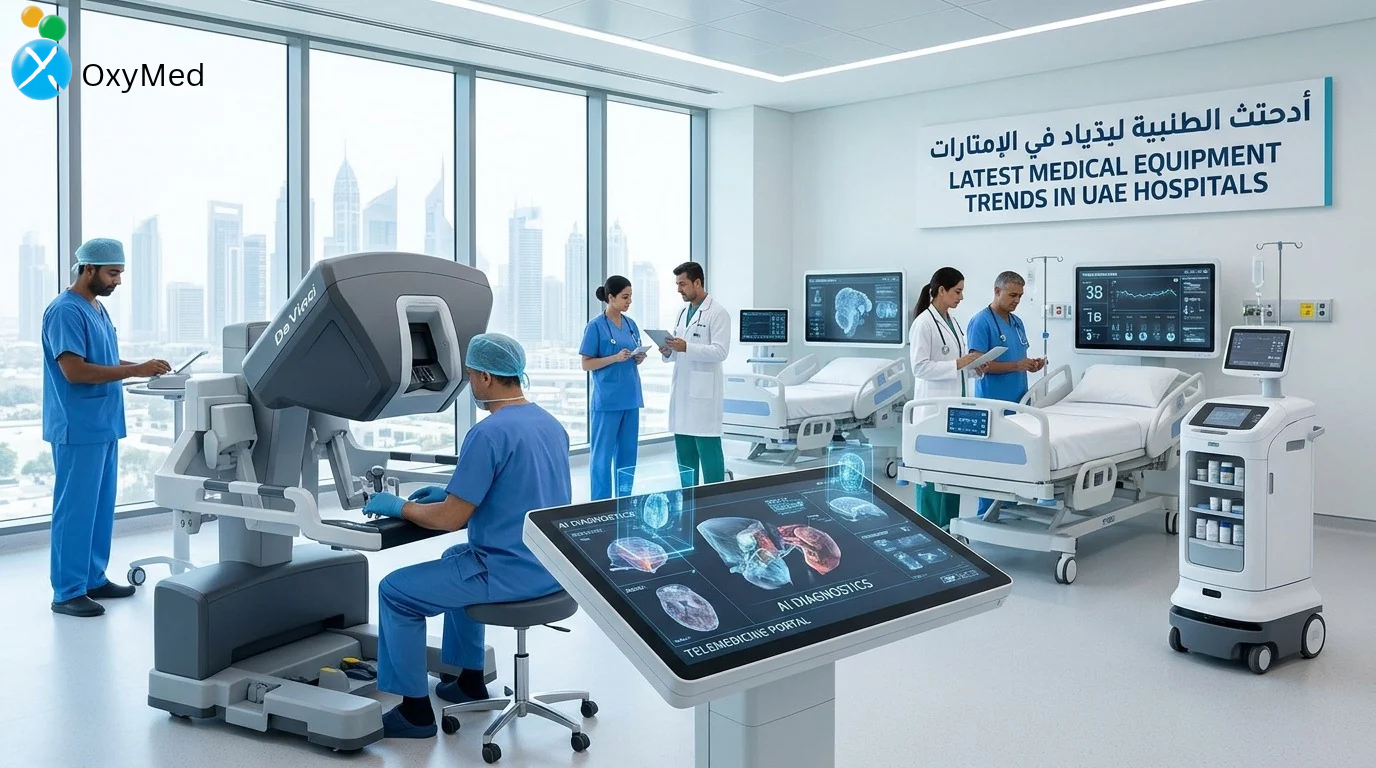
    The healthcare industry in the United Arab Emirates is embracing advanced technologies to improve patient care, diagnostic accuracy, and hospital efficiency. In 2026, hospitals, clinics, and diagnostic laboratories are increasingly exploring innovative medical equipment that supports faster clinical decisions, safer procedures, and better resource management. Choosing reliable equipment and dependable suppliers is becoming essential for healthcare providers across the country. For hospitals seeking Wholesale Medical Supplies in UAE, understanding these developments can help improve procurement decisions and prepare facilities for changing clinical requirements. OxyMed offers a range of healthcare, laboratory, and medical supply solutions to support healthcare organisations across the UAE.

    1. AI-Powered Medical Equipment Transforming Hospital Care

    Artificial intelligence is becoming an important part of modern healthcare technology. AI-enabled systems can help healthcare professionals analyse information, identify patterns, and make informed clinical decisions.

    AI-Enabled Diagnostic Imaging Systems

    AI-supported imaging tools assist in reviewing medical scans and highlighting areas that may require further examination. These technologies can support radiologists in detecting abnormalities and prioritising urgent cases.

    Intelligent Patient Monitoring and Early Warning Systems

    Smart monitoring systems analyse patient observations and may alert clinical teams when readings indicate potential deterioration. This can support timely intervention in critical care environments.

    AI-Assisted Clinical Decision-Making

    AI-based clinical tools help organise patient information and provide decision-support insights. Healthcare professionals remain responsible for interpreting results and making treatment decisions.

    2. Advanced Diagnostic Imaging Technologies

    Accurate diagnosis depends on reliable imaging equipment. Hospitals in the UAE are exploring advanced imaging technologies to improve clinical assessment across multiple medical specialties.

    Next-Generation MRI and CT Scanners

    Modern MRI and CT systems can provide detailed images while offering improvements in scanning speed and workflow efficiency. Equipment selection should consider clinical requirements, patient comfort, and maintenance needs.

    3D and AI-Powered Medical Imaging

    Three-dimensional imaging helps specialists understand complex anatomical structures. AI-supported image processing can further assist with visualisation, measurement, and diagnostic workflows.

    Portable Ultrasound and Point-of-Care Imaging

    Portable ultrasound devices bring imaging capabilities closer to patients, including emergency departments, intensive care units, and bedside examination areas.

    3. Robotic Surgery and Smart Operating Room Equipment

    Surgical technology continues to advance through automation, digital integration, and precision-focused equipment.

    Robotic-Assisted Surgical Systems

    Robotic-assisted platforms allow trained surgeons to control specialised instruments during selected procedures. Their potential benefits depend on the procedure, clinical expertise, and appropriate patient selection.

    Integrated Digital Operating Rooms

    Digital operating rooms connect imaging systems, surgical displays, patient monitors, and other equipment to support coordinated workflows.

    Precision-Guided Minimally Invasive Procedures

    Advanced visualisation and navigation technologies can assist surgeons in performing selected procedures through smaller incisions, potentially supporting recovery and reducing tissue disruption.

    4. Connected Medical Devices and Smart Patient Monitoring

    Connected medical equipment helps healthcare teams access relevant patient information efficiently and coordinate care across departments.

    IoT-Enabled Hospital Equipment

    Internet-connected devices can transmit operational data and support equipment-status monitoring. Hospitals should implement appropriate cybersecurity and access controls.

    Wireless Vital Signs Monitoring

    Wireless monitors can track measurements such as heart rate, oxygen saturation, blood pressure, and temperature, depending on the device.

    Integration with Electronic Health Records

    Compatible equipment can transfer clinical measurements into electronic health records, reducing manual documentation and helping maintain consistent patient information.

    5. Portable and Point-of-Care Diagnostic Equipment

    Portable diagnostic technology is valuable when healthcare professionals need timely information close to the patient.

    Handheld Diagnostic Devices

    Handheld equipment, including portable pulse oximeters and selected ultrasound devices, can support assessments in different clinical settings.

    Bedside Testing and Rapid Diagnostics

    Point-of-care testing enables selected tests to be performed near patients, helping clinical teams obtain results without relying exclusively on central laboratories.

    Mobile Equipment for Emergency and Critical Care

    Mobile diagnostic units, emergency trolleys, and portable monitoring devices help staff respond to changing patient needs in emergency departments and intensive care units.

    6. Innovations in ICU and Critical Care Equipment

    Intensive care units depend on reliable equipment that supports continuous observation and essential life-sustaining treatments.

    Advanced Ventilators and Respiratory Support Systems

    Modern ventilators provide different respiratory support modes for patients with varying clinical needs. Correct configuration, staff training, and routine maintenance are essential.

    Smart Infusion Pumps

    Smart infusion pumps may include dose-error reduction software and configurable safety limits to help reduce certain medication administration risks.

    Next-Generation Patient Monitoring Systems

    Advanced monitors provide continuous observations and configurable alarms, helping clinical teams assess critically ill patients and respond when intervention is required.

    7. Modern Laboratory and Automated Diagnostic Equipment

    Laboratory automation is helping healthcare facilities manage increasing testing requirements while improving workflow consistency.

    Automated Laboratory Analysers

    Automated analysers process clinical samples for selected tests, including biochemical and haematological investigations.

    Robotic Laboratory Workflows

    Robotic systems can assist with repetitive tasks such as sample handling and sorting, depending on laboratory design and testing requirements.

    Faster and More Accurate Diagnostic Testing

    Automation, quality-control procedures, and validated testing methods can improve laboratory efficiency. Accuracy still depends on appropriate sample handling, calibration, and quality assurance.

    8. Telemedicine and Remote Patient Monitoring Equipment

    Digital healthcare services are expanding opportunities for remote consultations and follow-up care.

    Remote Diagnostic Devices

    Compatible blood pressure monitors, pulse oximeters, and other diagnostic devices can provide information for remote clinical assessment.

    Home-Based Patient Monitoring Systems

    Home monitoring technology supports selected patients who need ongoing observation outside hospital settings. Healthcare professionals should establish appropriate monitoring and escalation protocols.

    Connected Equipment for Virtual Consultations

    Integrated cameras, digital diagnostic devices, and secure communication platforms can help clinicians assess patients during virtual consultations.

    9. Sustainable and Energy-Efficient Medical Equipment

    Sustainability is becoming an important consideration in hospital procurement, alongside safety, performance, and affordability.

    Energy-Efficient Imaging Systems

    Hospitals can compare the energy consumption and operating requirements of imaging systems when evaluating equipment investments.

    Reusable and Waste-Reducing Medical Technologies

    Reusable devices can reduce waste where approved reprocessing procedures are available. Single-use products must not be reused contrary to manufacturer instructions or applicable regulations.

    Equipment Lifecycle and Maintenance Optimisation

    Preventive maintenance, timely repairs, and appropriate equipment utilisation can extend service life and reduce avoidable downtime.

    10. Key Factors Driving Medical Equipment Investments in UAE Hospitals

    Several factors influence medical equipment purchasing decisions across the UAE.

    Healthcare Infrastructure Expansion

    New healthcare facilities and upgrades to existing hospitals create demand for diagnostic systems, laboratory equipment, patient monitors, and essential medical supplies.

    Patient Safety and Clinical Efficiency

    Healthcare organisations prioritise equipment that supports dependable performance, infection prevention, effective workflows, and safe patient care.

    Medical Tourism and Specialised Healthcare Demand

    Demand for specialised treatments encourages facilities to evaluate advanced equipment across areas such as surgery, diagnostics, and critical care.

    Regulatory Compliance and Equipment Standards

    Hospitals must consider applicable UAE medical device registration, licensing, safety, and conformity requirements. Buyers should verify relevant documentation before purchasing equipment.

    11. How UAE Hospitals Can Choose the Right Medical Equipment in 2026

    Selecting suitable medical equipment requires a balance of clinical priorities, financial planning, and supplier reliability.

    Evaluating Clinical Needs and Total Cost of Ownership

    Hospitals should assess patient volumes, intended applications, staff requirements, consumable costs, installation expenses, and expected maintenance throughout the equipment's service life.

    Assessing Equipment Reliability and After-Sales Support

    Before purchasing, confirm warranty terms, spare-parts availability, technical support, maintenance arrangements, and training provisions.

    Prioritising Interoperability and Future-Ready Technology

    Equipment that integrates with existing hospital systems can improve information sharing and reduce workflow disruptions. Buyers should also consider upgrade options, cybersecurity, and compatibility with future requirements. Healthcare providers looking for Wholesale Medical Supplies Dubai can explore OxyMed's medical supplies and equipment range to identify products relevant to their facility's needs.

    Conclusion: The Future of Medical Equipment in UAE Hospitals

    Medical equipment trends in 2026 highlight the growing importance of artificial intelligence, connected monitoring, advanced diagnostics, automation, and sustainable procurement. Although these innovations offer significant opportunities, hospitals must evaluate every investment according to clinical suitability, safety, regulatory compliance, and long-term value. Working with an experienced supplier can simplify procurement and help healthcare organisations source the equipment and supplies they require. OxyMed supports healthcare and laboratory requirements through its medical supply solutions and UAE presence. Whether you are equipping a new facility or replenishing essential products, choosing the right partner for Wholesale Medical Supplies in UAE and Wholesale Medical Supplies Dubai can help your organisation maintain efficient operations and focus on delivering quality patient care.   Visit OxyMedz.com to explore available products or contact the team to discuss your medical supply requirements.