

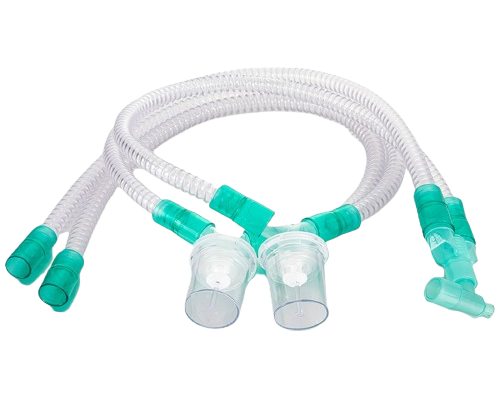
Breathing tubes maintain open airways during anesthesia, mechanical ventilation, or respiratory failure when patients cannot breathe independently. Made of flexible PVC with inflatable cuffs, they pass through mouth or nose, past vocal cords, into the trachea to secure ventilation and prevent aspiration of secretions or stomach contents. Inserted using laryngoscopes under direct visualization, tubes connect to ventilators delivering controlled oxygen mixtures. Radiopaque lines enable X-ray confirmation of placement; depth markings guide proper positioning. Cuff inflation (20-30 cmH2O) creates an airtight seal while minimizing tracheal damage.