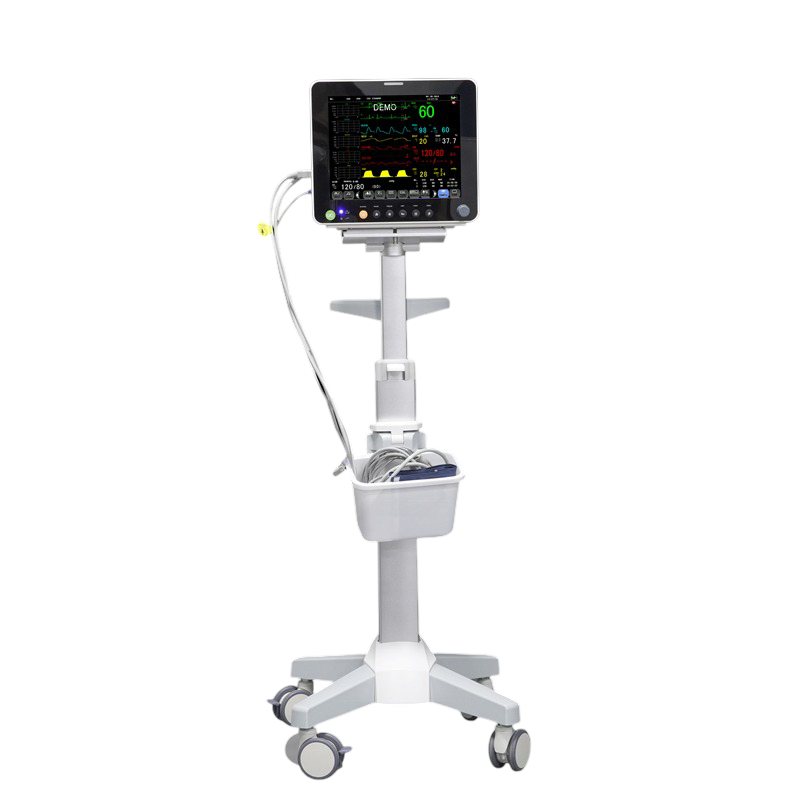
Capnographs are medical monitoring devices that provide continuous, noninvasive measurement of carbon dioxide (CO2) levels in exhaled breath, displaying real-time waveforms known as capnograms. Using infrared absorption spectroscopy, they detect CO2 concentration as patients breathe through a sensor in the airway circuit—either mainstream (at the endotracheal tube) or sidestream (sampling via tubing)—producing a four-phase waveform: baseline (Phase I, dead space), rapid rise (Phase II), alveolar plateau (Phase III, end-tidal CO2 or EtCO2), and sharp drop (Phase 0 inspiration). Essential in anesthesia, sedation, CPR, and critical care, capnography confirms intubation, assesses ventilation adequacy, detects hypoventilation or bronchospasm early, and evaluates return of spontaneous circulation.